What Is an Art-First Image Model?
A practical framework for understanding art-first image models through composition, light, visual lineage, evaluation, and honest capability boundaries.
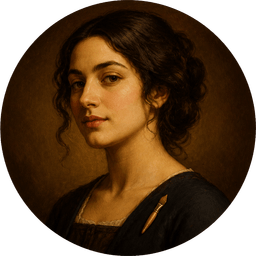 monalisa-1 Studio
“Art-first” describes an order of priorities
An art-first image model is not simply a generator with an “oil painting” preset. The useful distinction is the order in which a system is expected to solve the picture.
A general-purpose image model may begin with literal instruction coverage: include every requested object, render readable text, preserve a product detail, or follow a precise edit. An art-first direction begins one level higher. It asks whether the image has a convincing center of attention, whether light organizes the scene, whether empty space has a purpose, and whether the selected visual tradition holds together.
Neither order is universally better. They serve different briefs.
Composition comes before decoration
Many weak generated images contain all the requested ingredients but still feel unresolved. The subject sits in the middle, the background fills itself with detail, and every area asks for equal attention.
An art-first approach treats composition as structure rather than polish:
- Hierarchy — what should the eye notice first, second, and last?
- Negative space — where should the image remain quiet?
- Weight and balance — does the subject feel anchored within the frame?
- Edge behavior — what enters, leaves, or presses against the boundary?
- Rhythm — do repeated shapes, gestures, or values guide the eye?
These are not style keywords. They are relationships inside the picture.
Light is part of the idea
Lighting prompts are often written as a pile of cinematic terms. More words do not guarantee a better image.
An art-first brief gives light a job. A narrow side light might separate a face from a dark room. A soft window source might make the surrounding silence more important than the subject. A flat overcast scene might be chosen because color, not contrast, should carry the emotion.
The practical question is not “Which lighting buzzword should I add?” It is “What should the light make the viewer feel and understand?”
A visual lineage is more than a filter
Oil, watercolor, woodcut, analog film, charcoal, and fine-line painting are not interchangeable surface textures. Each has its own logic:
- watercolor often depends on reserved paper, transparent layers, and edges that move between control and bloom;
- relief printing turns value into carved shape and deliberate rhythm;
- charcoal gains force from pressure, erasure, and the contrast between mass and line;
- film photography brings exposure, grain, lens behavior, and a relationship to captured time.
Calling a model art-first means expecting it to treat those traditions as coherent visual systems. That expectation still needs evidence. A convincing single image does not prove control across a series.
How to evaluate the idea honestly
Without a published benchmark, the best evaluation is a transparent, repeatable comparison. Use the same brief, record the model and settings, and judge the output against the intended work rather than a vague idea of “quality.”
1. Start with a plain prompt
Use a short subject-and-mood brief before adding technical prompt language. This reveals what the model supplies on its own.
2. Test a small series
Generate several images that belong to one visual world. Look for continuity in palette, mark-making, composition, and character treatment. Do not treat one lucky result as a system.
3. Inspect the hard parts
For portrait work, inspect expression, hands, clothing construction, and the relationship between the figure and the background. For a print or watercolor direction, inspect whether the medium's structural logic survives close viewing.
4. Record failures as well as successes
An honest model page should state what the model is not for. If typography, UI mockups, or information-dense layouts are better handled elsewhere, that boundary helps users choose well.
5. Keep provenance attached
Every example should identify the model that actually generated it. A mood board can illustrate a future product direction, but it must not be presented as output from an unreleased model.
Better prompts still matter
“Art-first” should not become an excuse for vague prompting. A useful creative brief can be concise while still naming the decisions that matter:
A solitary conservator examining a damaged portrait after closing time; the face is the quiet focal point, with large areas of dark gallery space; one warm side light; restrained earth colors; contemplative rather than dramatic.
This prompt specifies subject, hierarchy, space, light, palette, and emotional register. It leaves room for interpretation without outsourcing the entire picture to adjectives.
When a general-purpose model is the right choice
Choose a model around the deliverable, not the brand story. A general-purpose production model may be the better tool when the task depends on readable text, exact layout changes, reference-image editing, or a broad set of commercial formats.
An art-first model would earn its place by making different tradeoffs clearly—not by claiming to replace every other tool.
Where monalisa-1 fits
monalisa-1 is the name of an upcoming art-first model direction described by this studio. It is not currently available, has no published production specifications, and cannot be selected or billed.
The images available on this site today are generated by the third-party model named in the interface and attached to the result. Until monalisa-1 exists and can be evaluated with the process above, composition, light, visual lineages, and portrait attention remain design goals rather than performance claims.